[Built] Competition - First Prize
First LEED SCHOOL in Taiwan
Location: Kaohsiung, Taiwan
Project Team: Jia-yu Chen, Yu-ling Liu, Miao-ling Cheng, Shao-yu Deng (SD/DD/CD), Ying-zhang Huang, Waylon Lo, Jia-yu Chen, Jen-ho Yan (CA)
Total Floor Area: 6208 m2
Project year: 2012-2015
Photographer: Shawn Liu Studio
Location: Kaohsiung, Taiwan
Project Team: Jia-yu Chen, Yu-ling Liu, Miao-ling Cheng, Shao-yu Deng (SD/DD/CD), Ying-zhang Huang, Waylon Lo, Jia-yu Chen, Jen-ho Yan (CA)
Total Floor Area: 6208 m2
Project year: 2012-2015
Photographer: Shawn Liu Studio
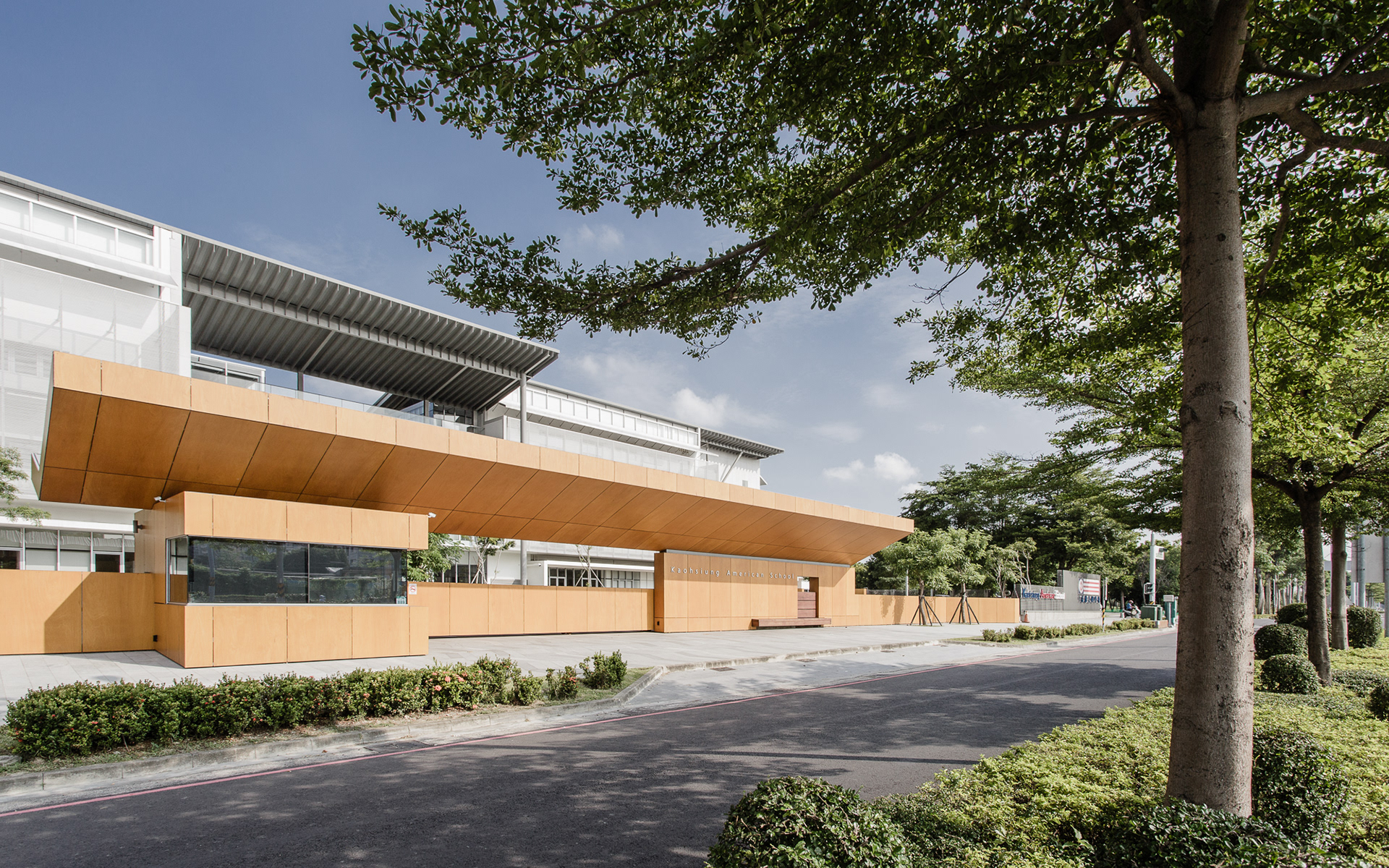
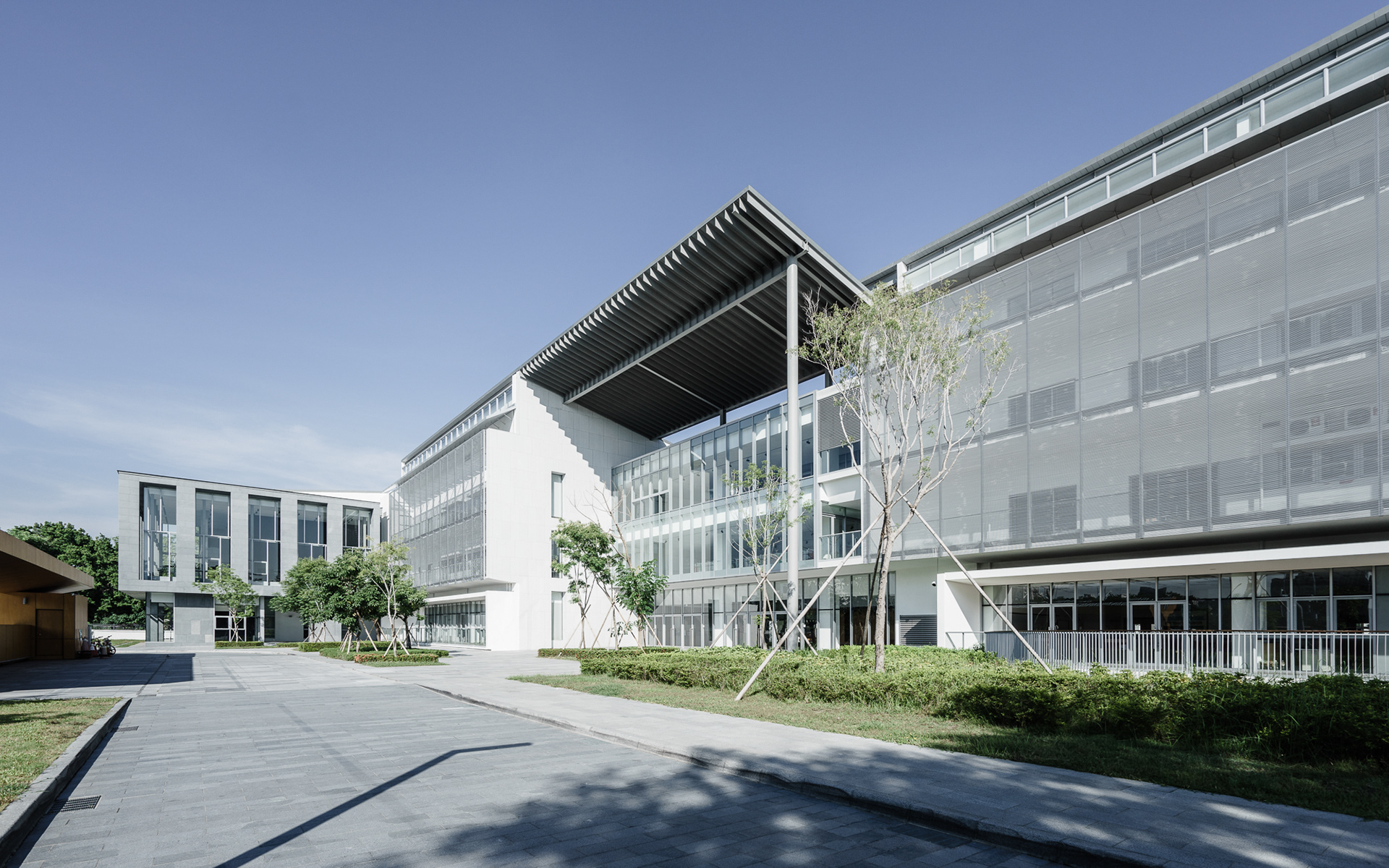
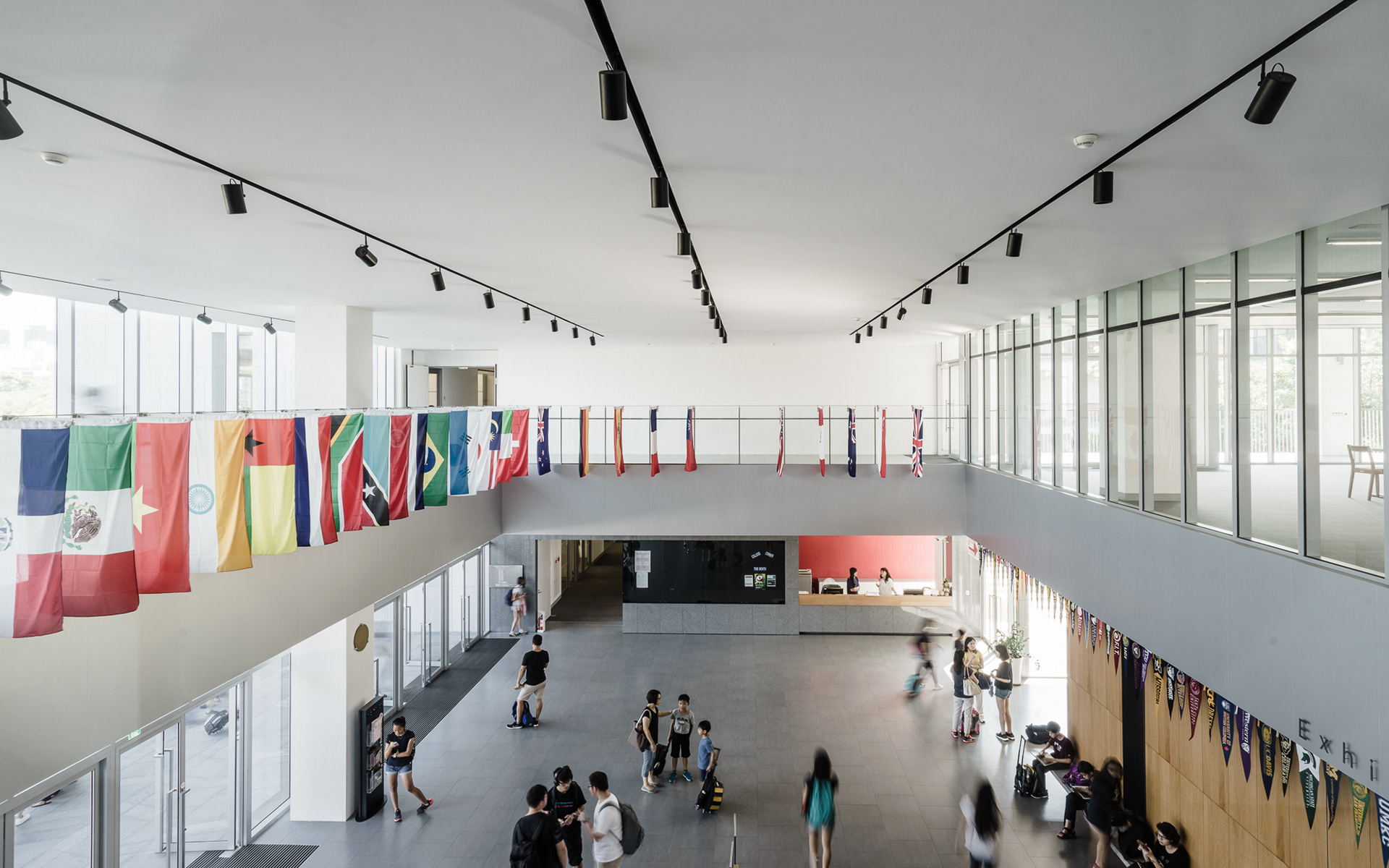
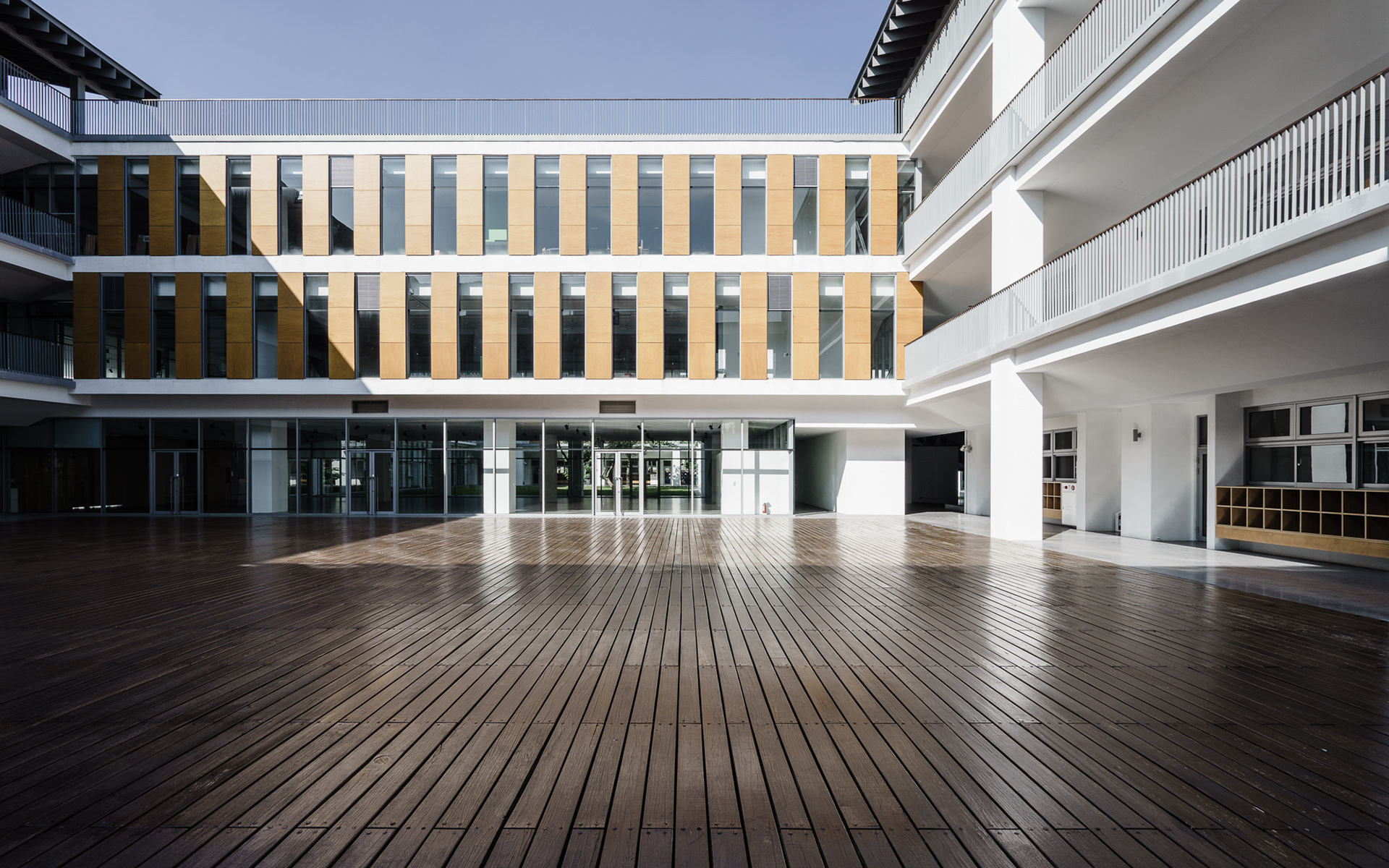
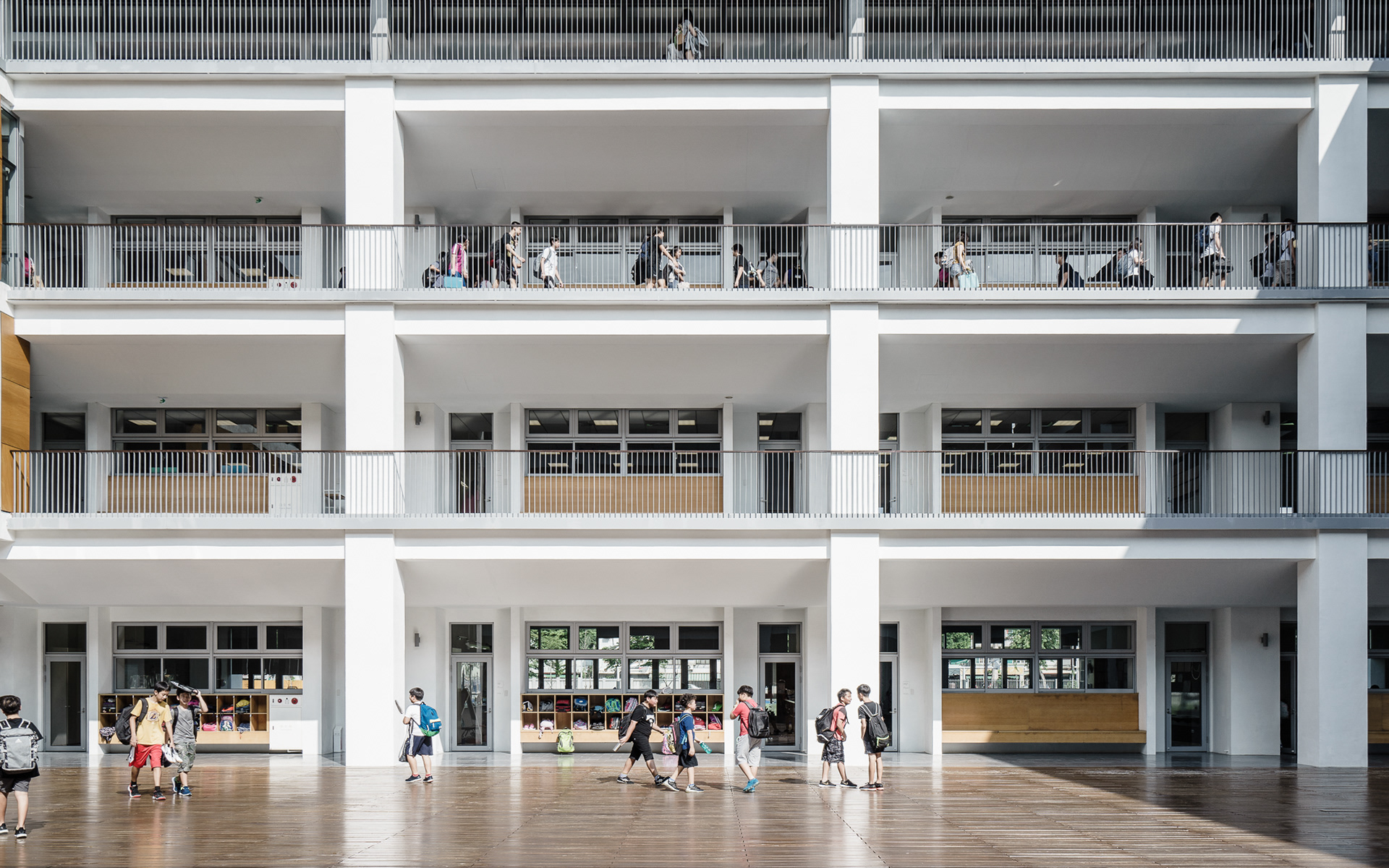
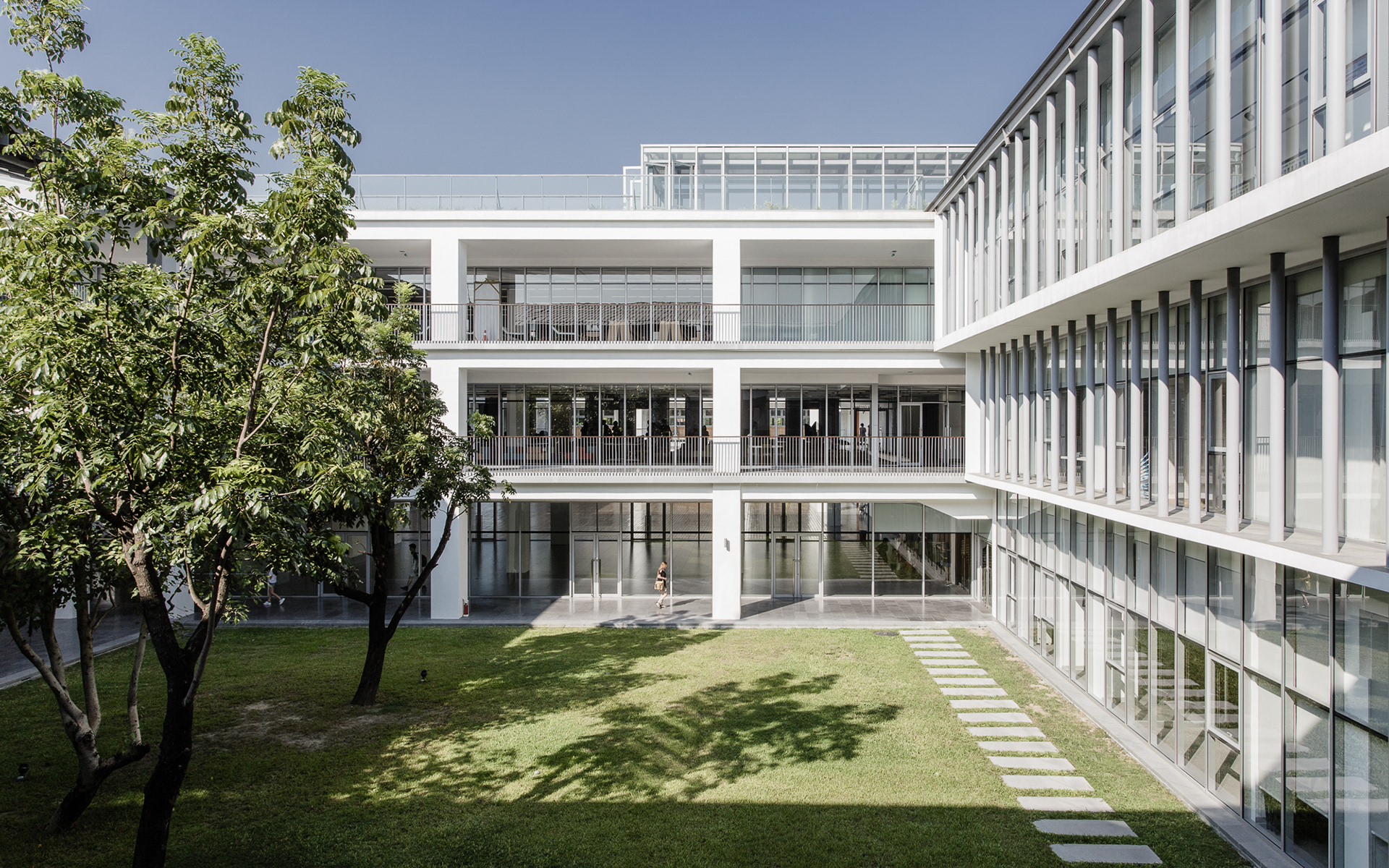
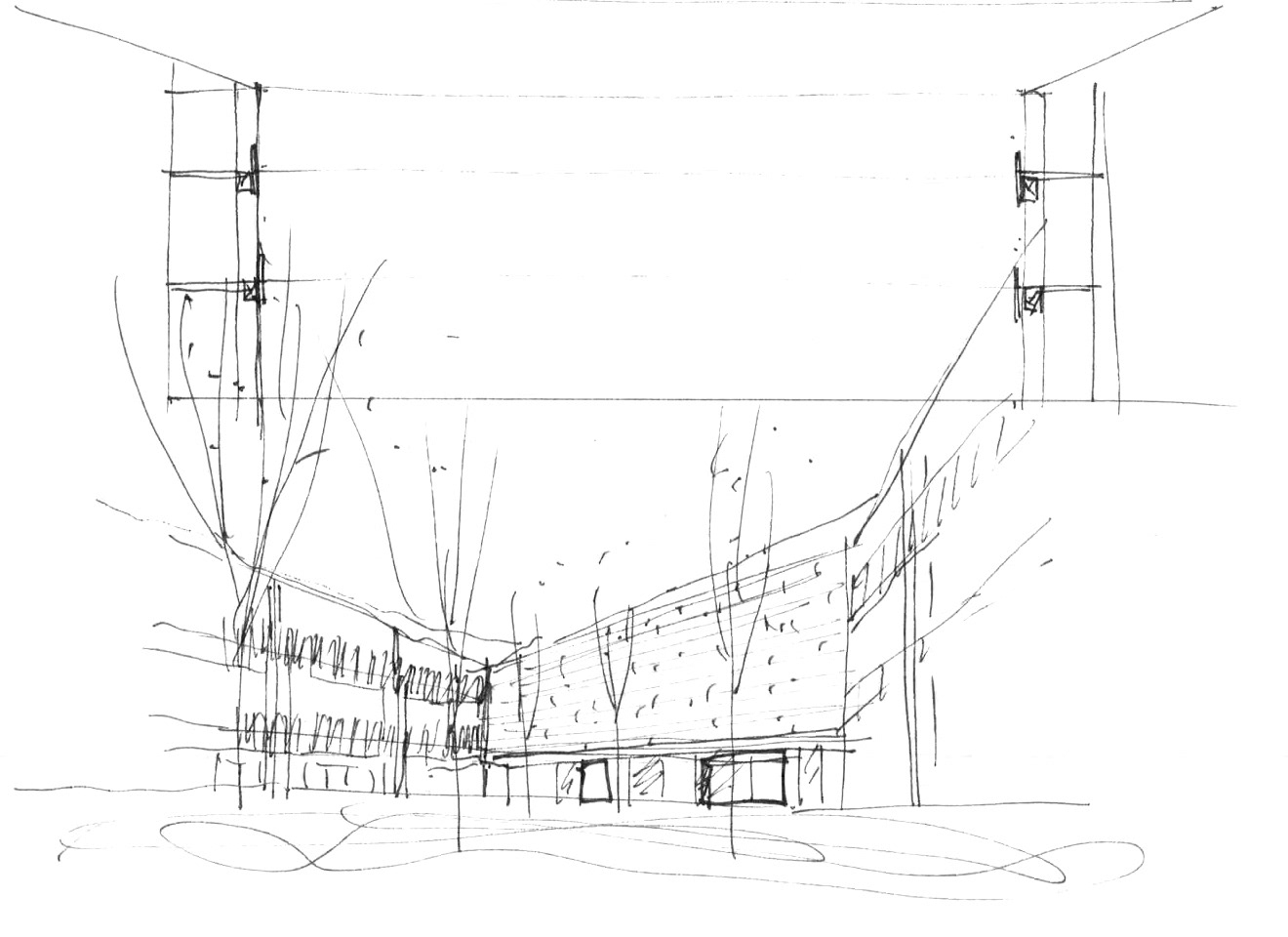
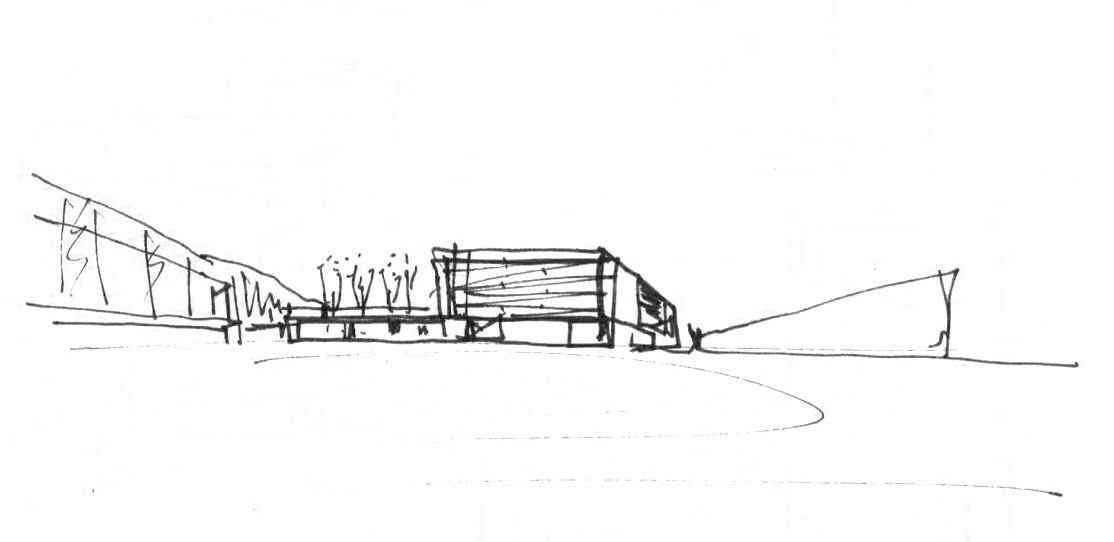
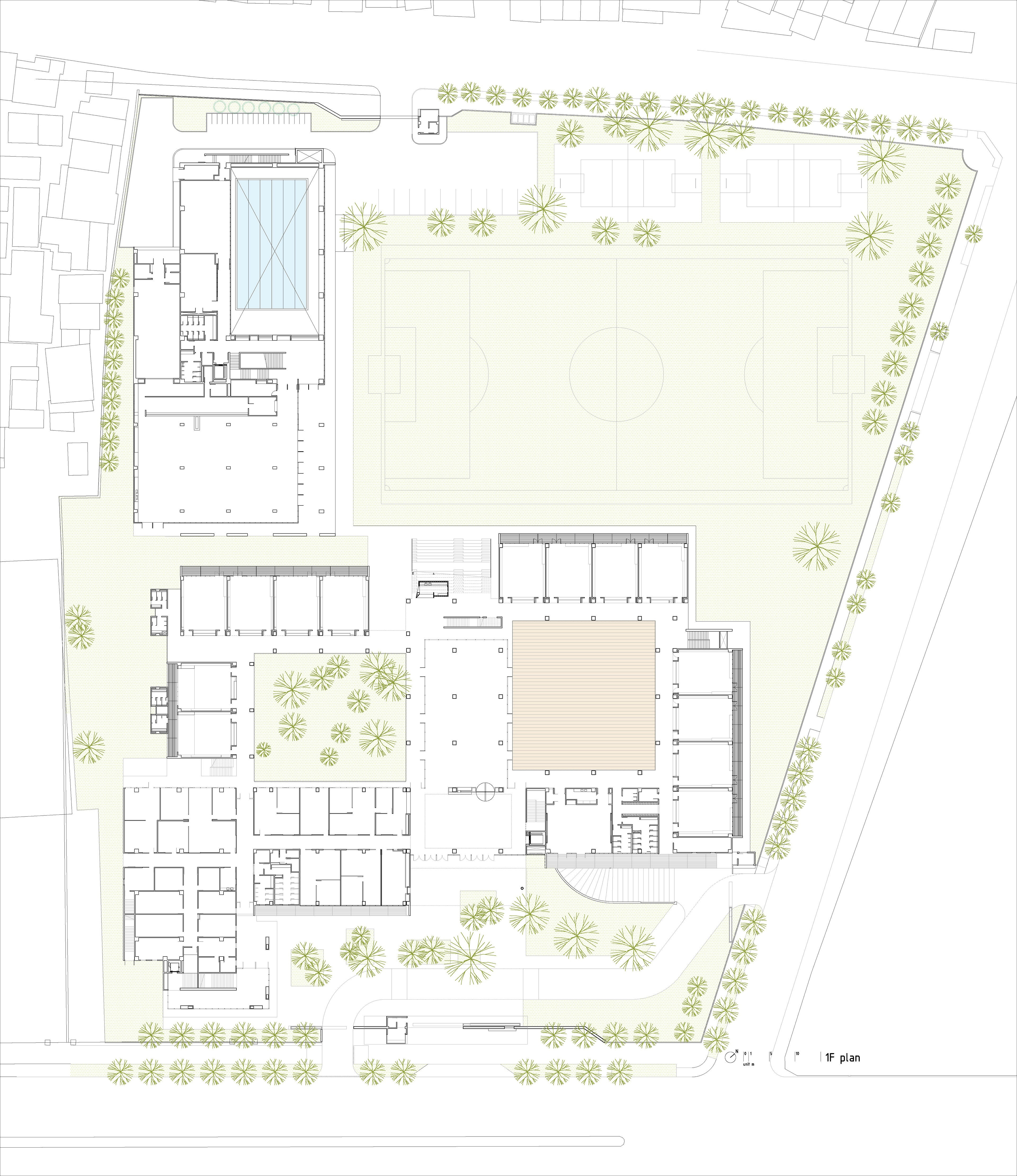
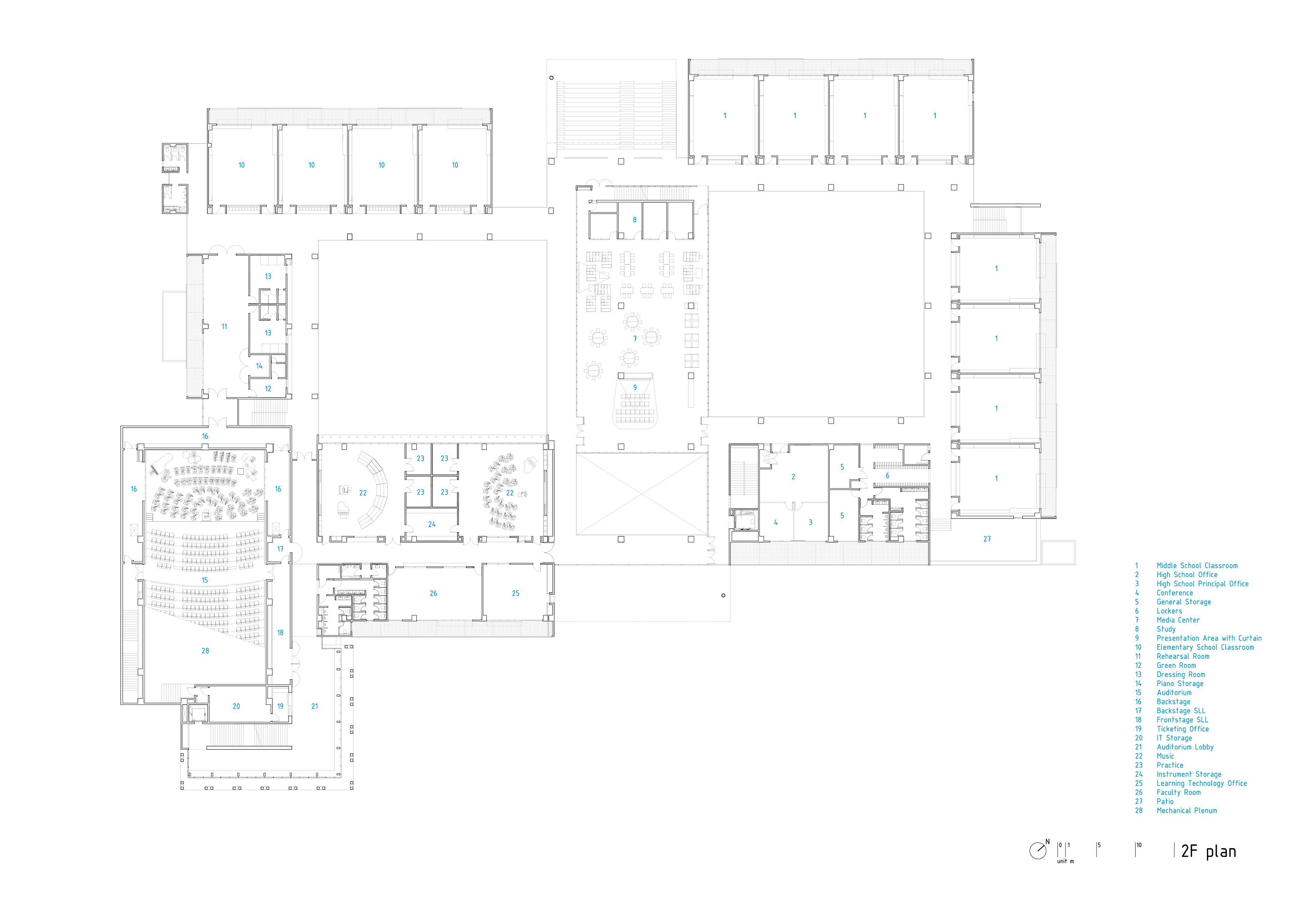
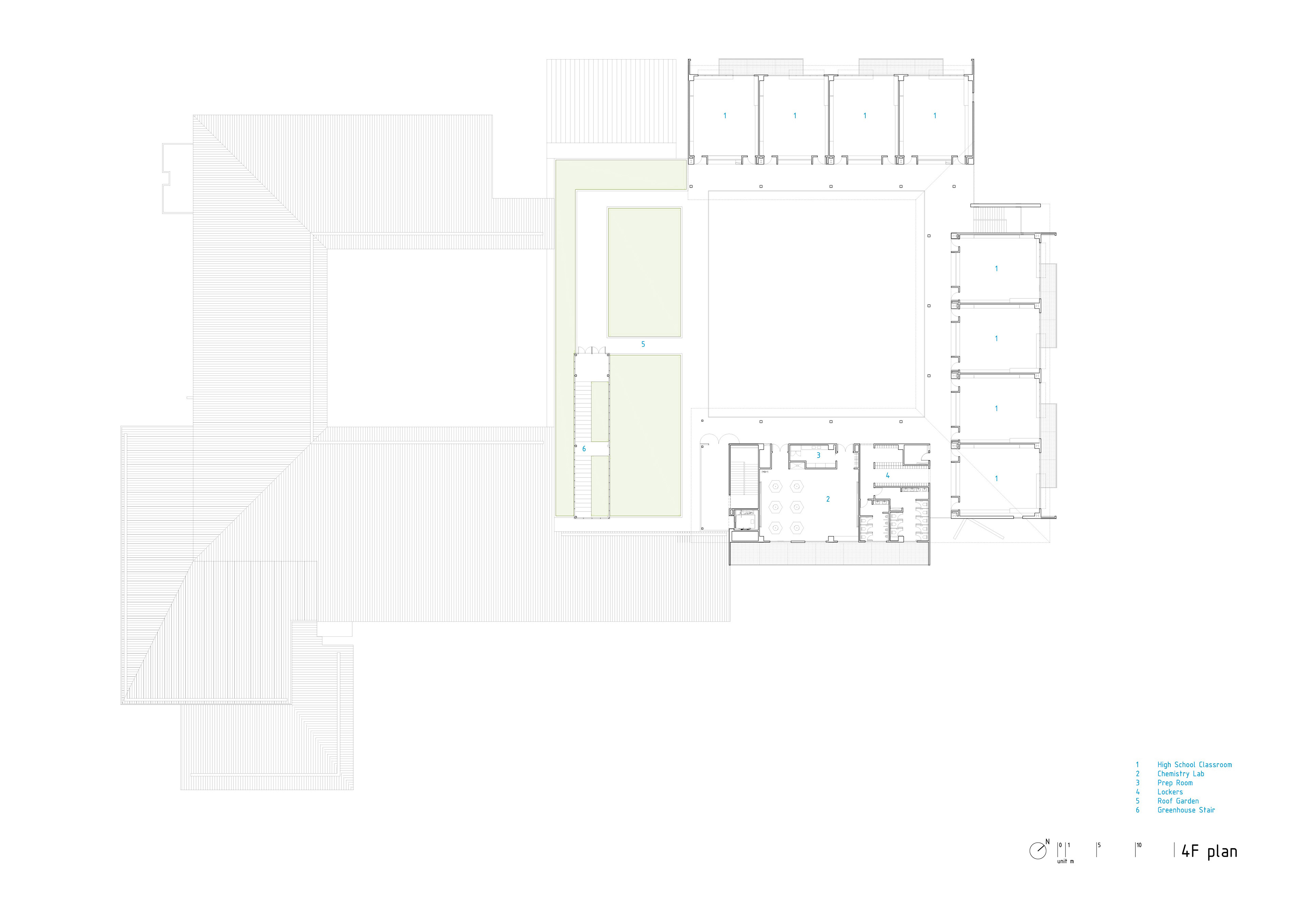
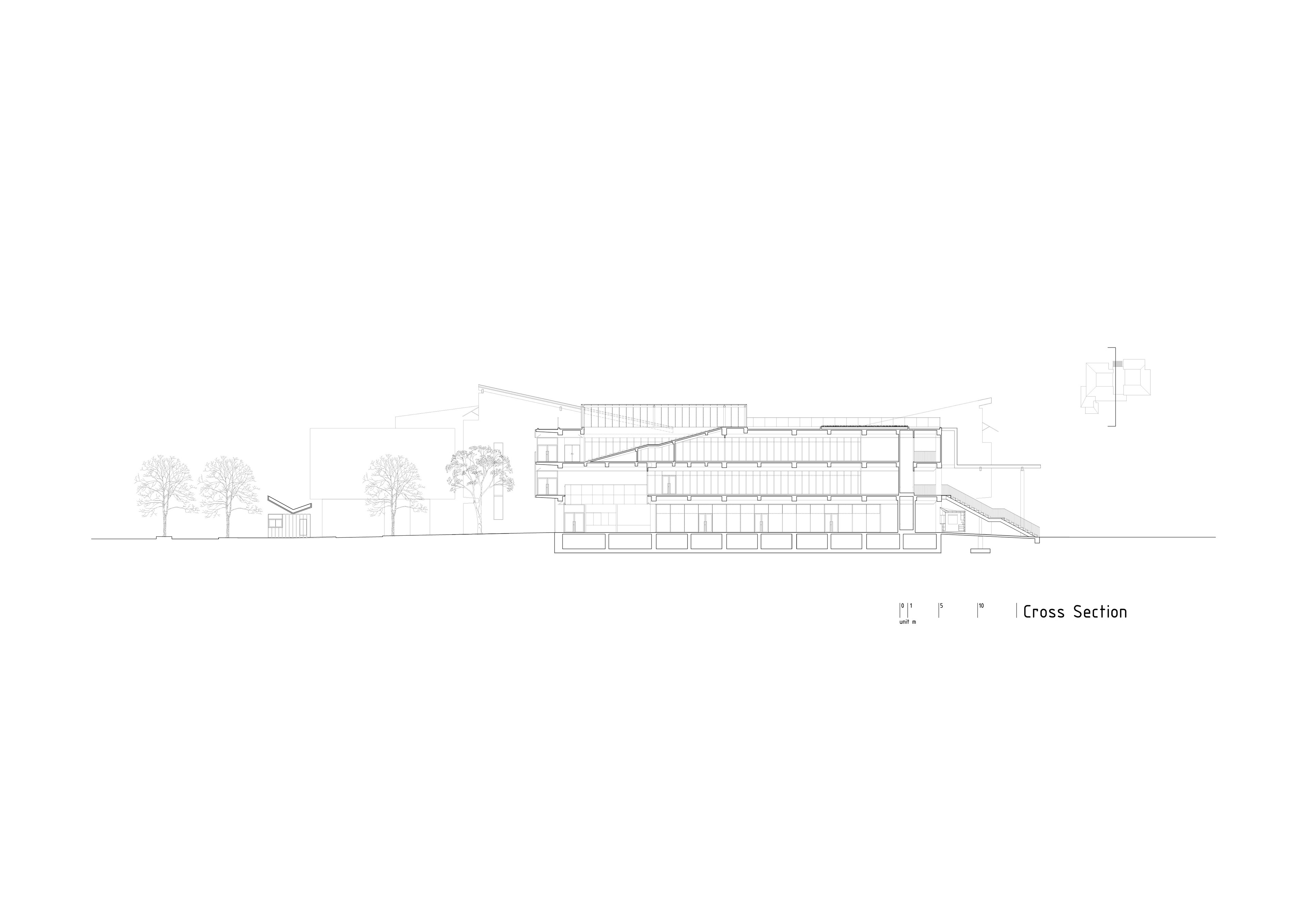
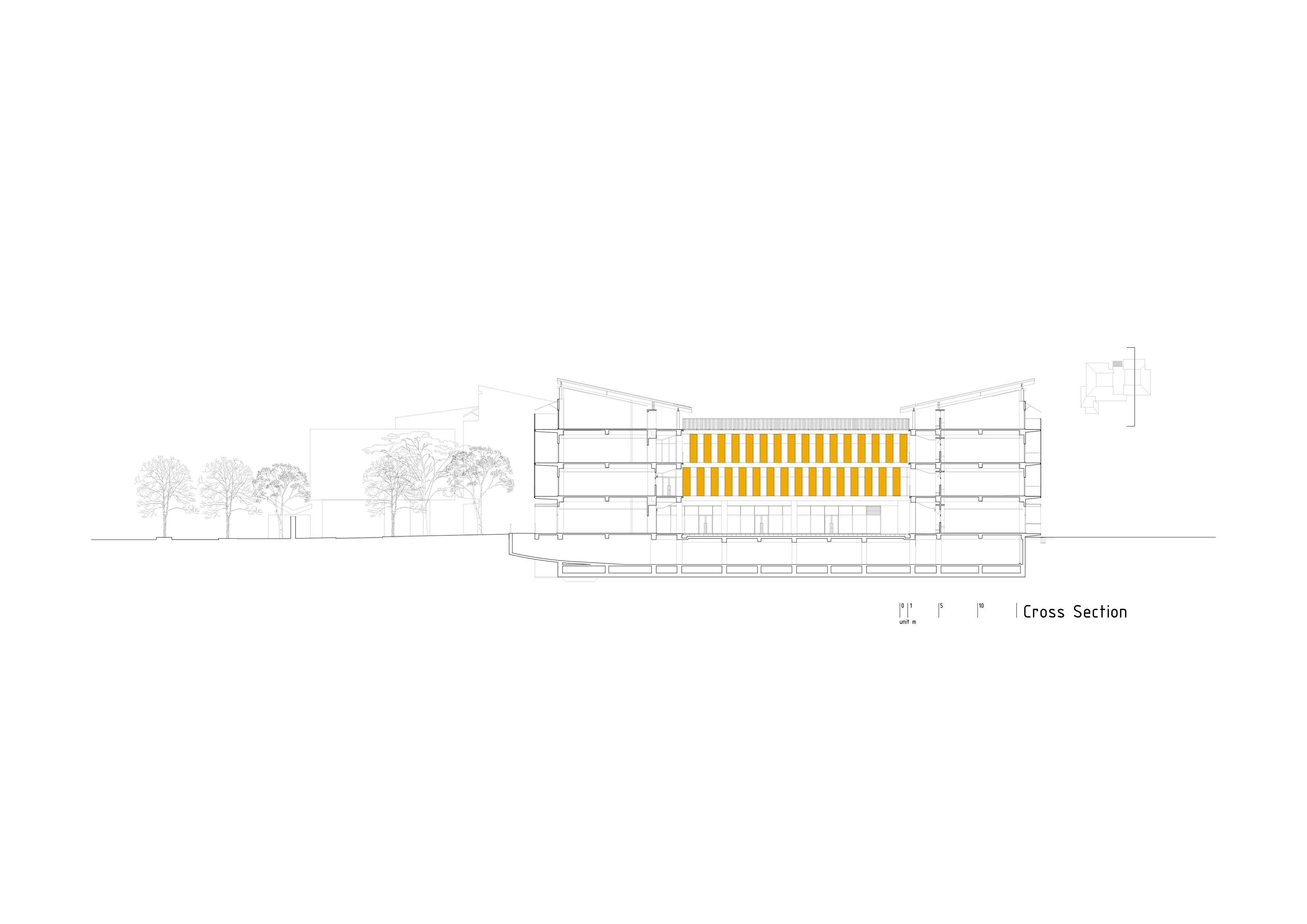
Kaohsiung American School is organized around two quadrangles joined by a central Learning Hub. The elementary quad faces west around a grassy yard anchored by preserved trees, while the middle- and high-school quad frames a large wood platform. Between them, the Hub gathers the school's shared rooms — exhibition hall, media center, library, and roof terrace. Semi-open corridors wrap it in a double loop, an infinity sign in plan, so the Hub can be entered from any side and becomes the school's confluence of movement and information.
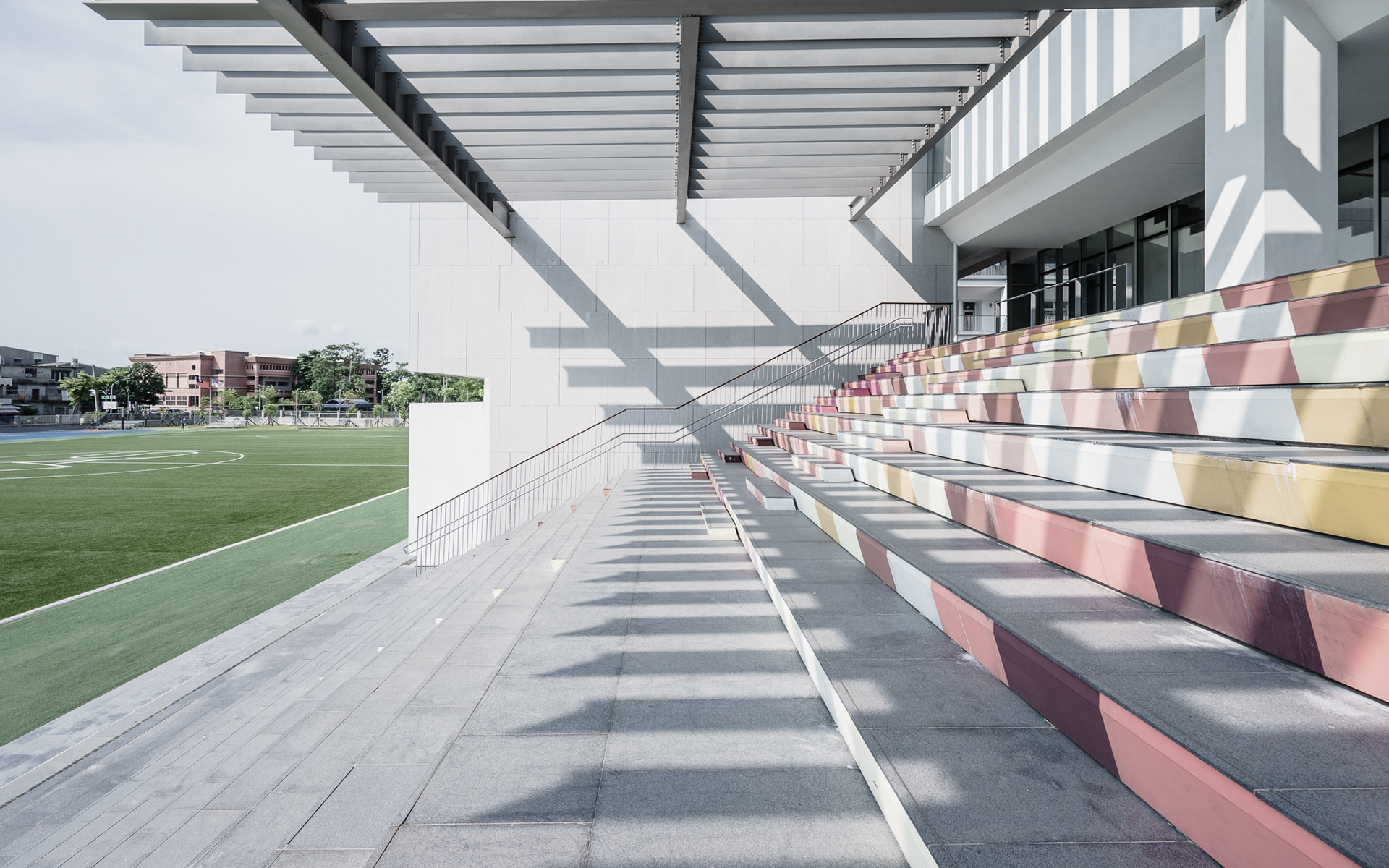
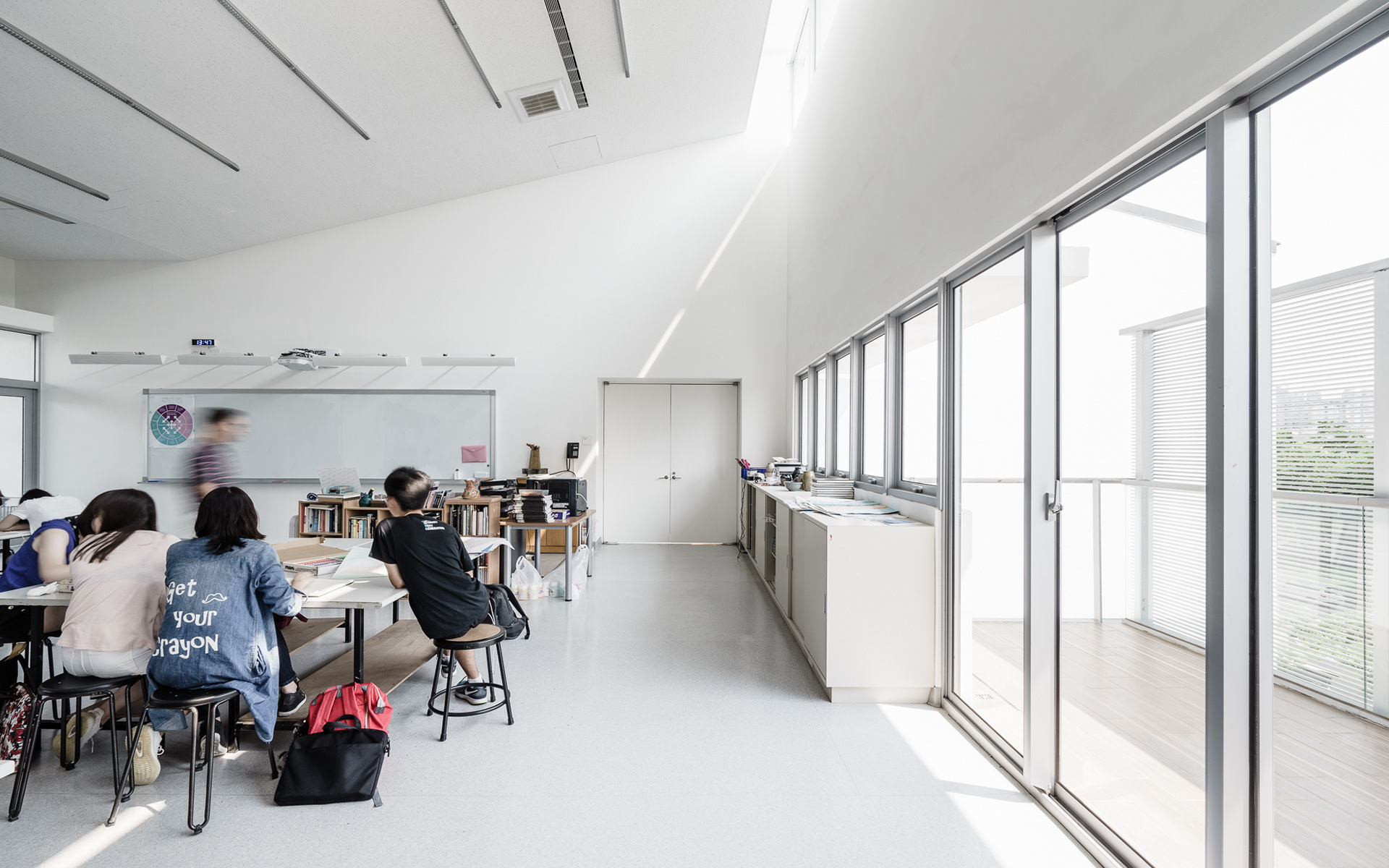
The quadrangle also carries the building's defining idea. A spatial type used in American higher education since the nineteenth century, it echoes the Taiwanese vernacular courtyard where a clan once dwelled; here the two traditions merge, the local veranda taking on the grandeur of the collegiate loggia. These semi-open corridors do more than connect: by sparing the building the energy load and opacity of a sealed envelope, they keep students in daily contact with sun, wind, and light — an approach that made KAS the first LEED-certified school in Taiwan, later awarded a Silver rating.
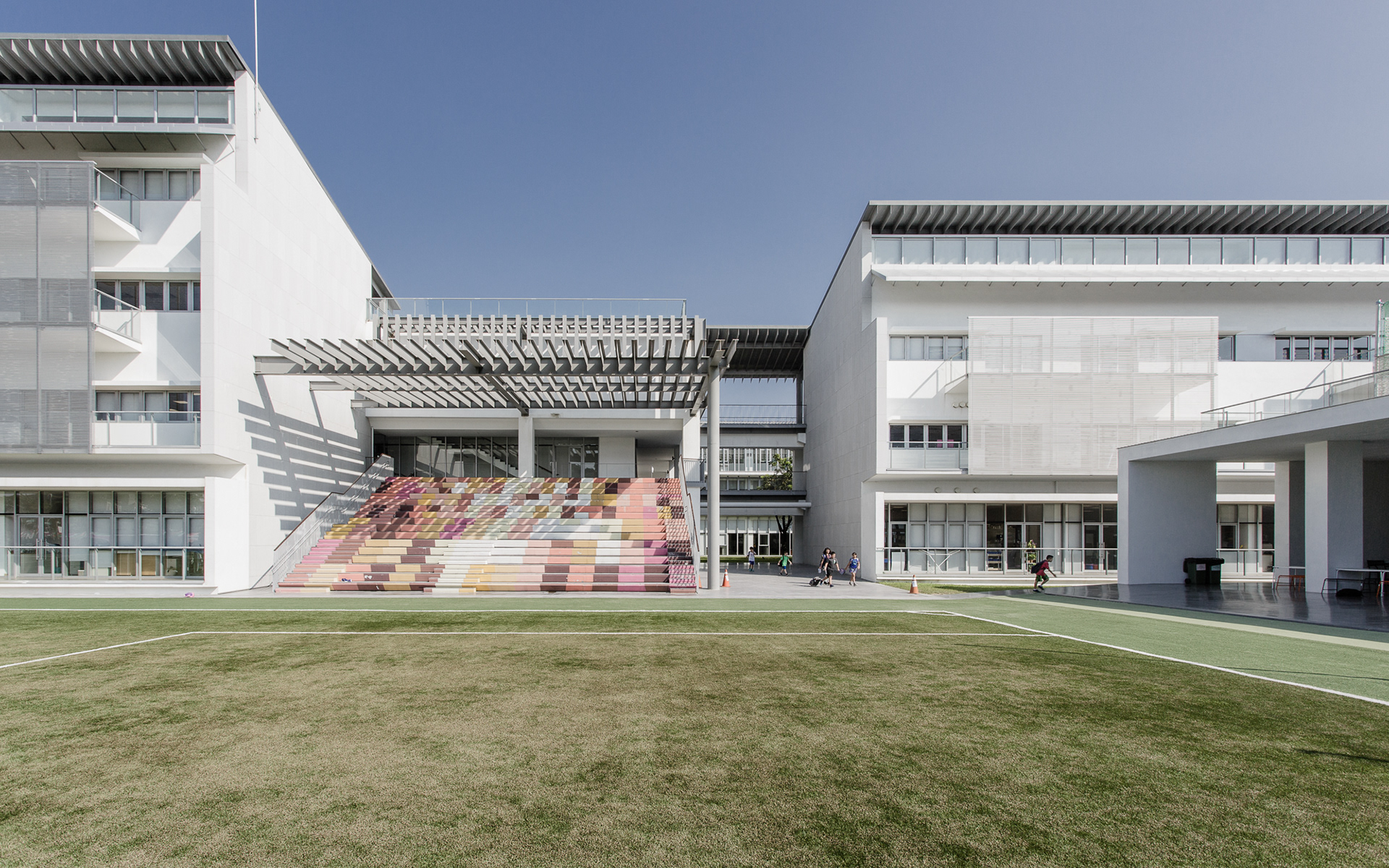
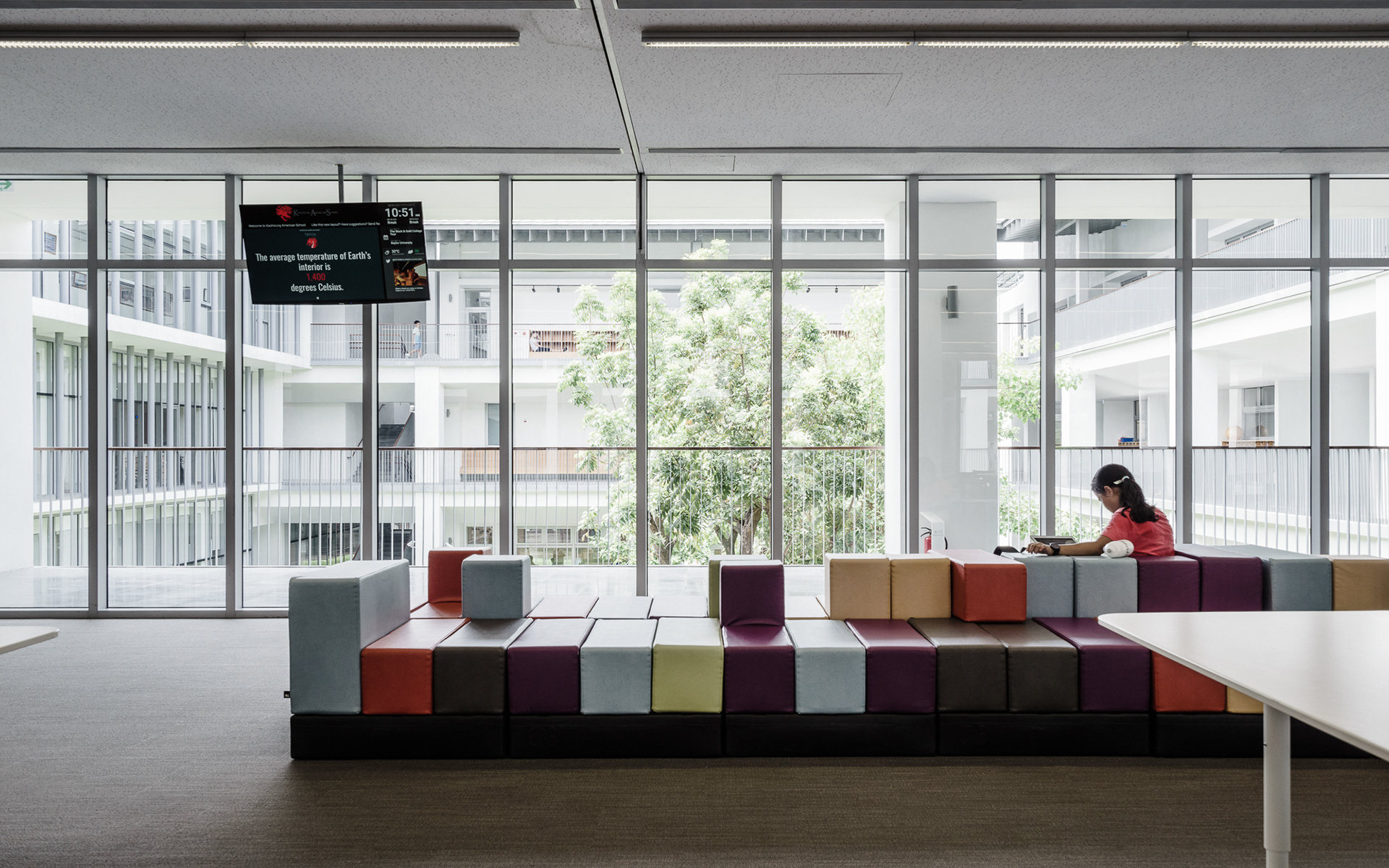
Within this framework, circulation itself becomes a sequence of learning spaces. Permeable borders between rooms invite movement and cross-disciplinary exchange: stairs widen into gathering steps, corridors hold long oak benches that form pockets for pause and conversation, and hallways open onto raised platforms overlooking the activity below.
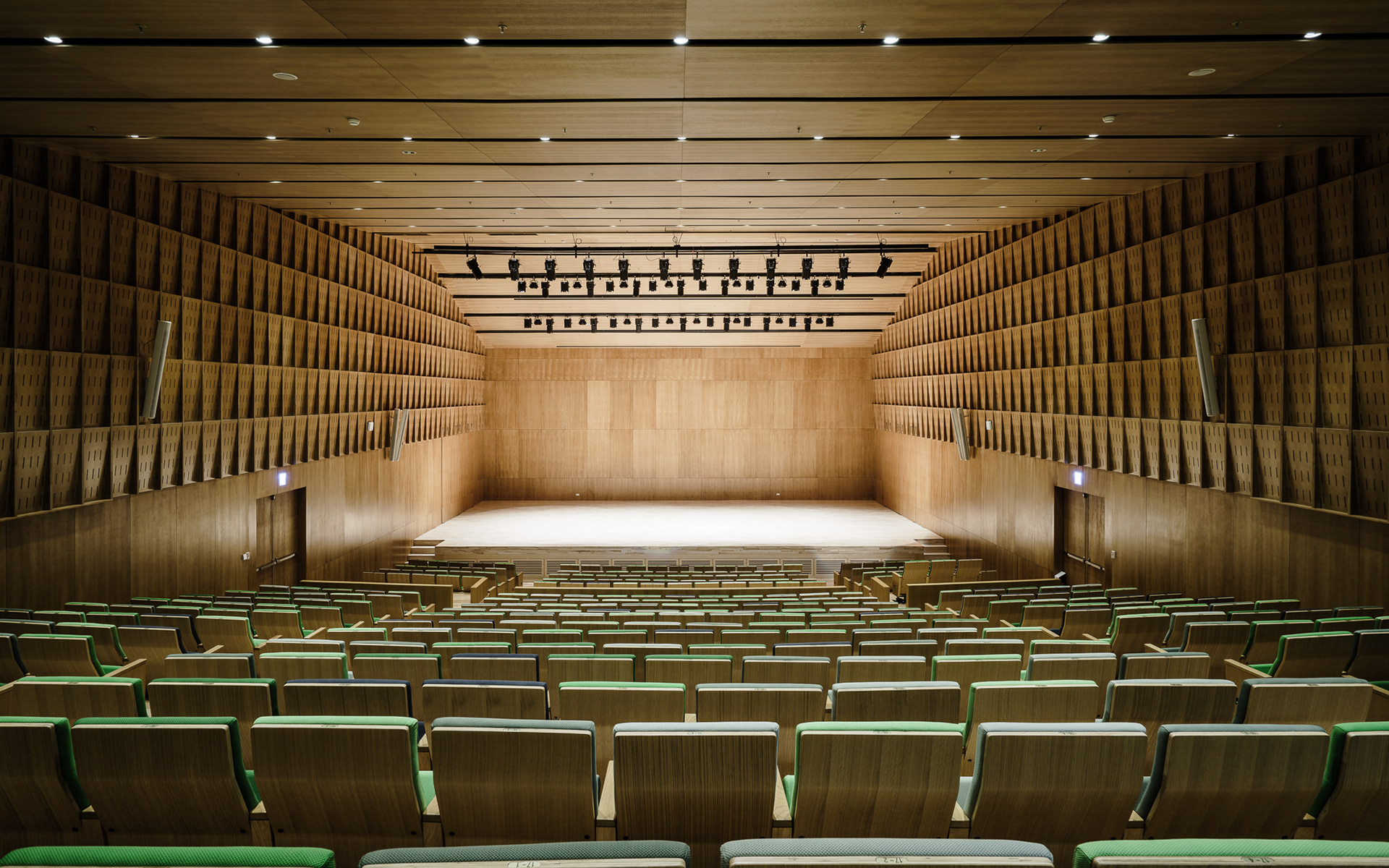
The 400-seat auditorium takes the form of a shoebox for acoustic clarity. A sliding wall opens its backstage into the adjacent music rooms for larger productions, and curtains retract from behind wood panels to tune the room between speech and music. Outside, the façade layers glass, white stucco, fine aluminum scrims, staggered stone, and wood, modulating light and heat into shifting shadow and depth.